
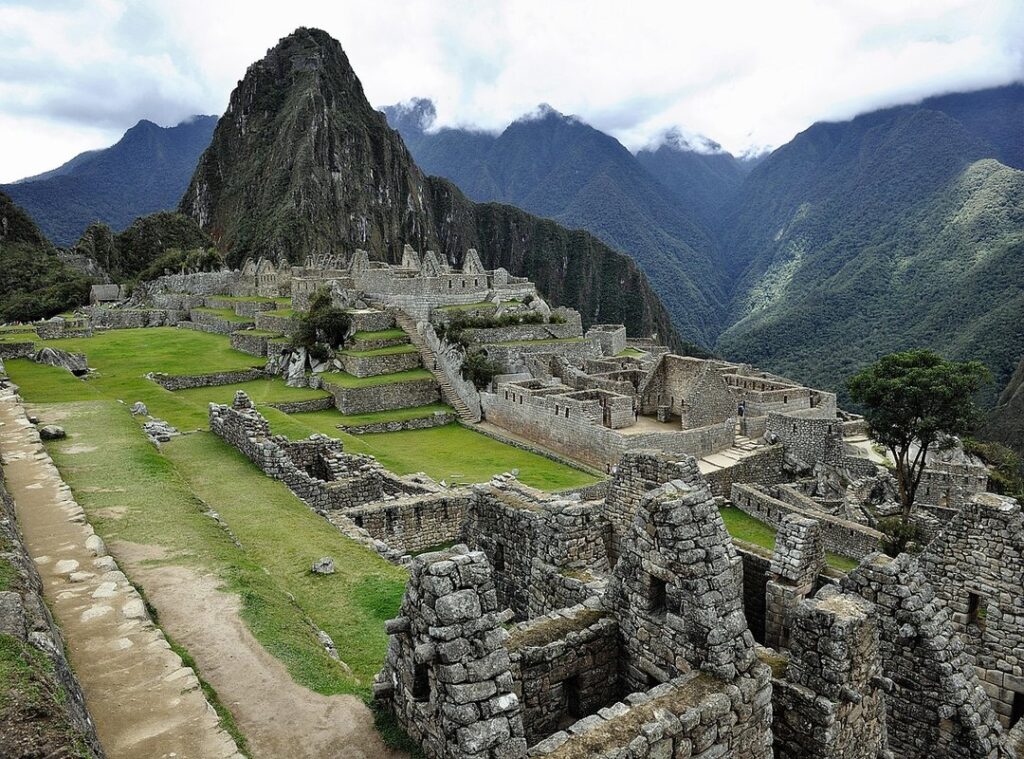
The Inca civilization is a vast and complex topic. It covers incredible feats of engineering, a unique social structure, and a rich spiritual world. It can be overwhelming to dive into.
A mind map is the perfect visual tool to untangle this complexity. It helps you organize your thoughts and see connections you might otherwise miss.
This guide provides a simple, step-by-step process for drawing a comprehensive and insightful dibujo mapa mental de los incas. You’ll create a powerful study aid and gain a much deeper understanding and appreciation for this amazing culture.
Why a Mind Map is the Perfect Tool for Understanding the Incas
A mind map is a diagram that visually organizes information around a central subject, using branches for key ideas and sub-topics. It’s like a tree where the trunk is your main topic, and the branches are all the related details.
Mind maps boost memory retention, simplify complex relationships, and make learning more engaging than reading linear notes. They’re especially useful for history, where everything is interconnected.
The Inca Empire was built on interconnected systems like the Qhapaq Ñan (road system), the Ayllu (family unit), and a centralized government. These systems are ideal for visual mapping. A dibujo mapa mental de los incas can help you see how these elements fit together.
Traditional note-taking often fails to capture the holistic and interconnected nature of the Inca world. Notes can feel disjointed and hard to follow. But with a mind map, you can see the big picture and all the little connections at once.
In short, a mind map is a powerful tool for understanding the Inca Empire. It helps you grasp the complexity and beauty of their society in a way that traditional notes just can’t.
Key Themes to Build Your Inca Mind Map Around
Start by placing The Inca Empire or Tawantinsuyu in the middle of your page. This is your central idea, and everything else will branch out from here.
Social Structure & Government should be your first main branch. Break it down into sub-branches like the Sapa Inca (emperor), the Ayllu (community unit), the class system (nobility vs. commoners), and the role of the military. Understanding these elements gives you a clear picture of how the Inca society was organized and governed.
Next, Engineering & Architecture. Highlight iconic sites like Machu Picchu, the Qhapaq Ñan (road network), advanced stonework techniques, and suspension bridges. This branch shows the incredible engineering feats that the Incas achieved, which can still amaze us today.
Economy & Agriculture is your third main branch. Include sub-branches for terrace farming, key crops like potatoes and maize, the concept of the mita (labor tax), and the quipu (knotted records for data). This helps you see how the Incas managed their resources and maintained a thriving economy.
Religion & Culture rounds out your mind map. Add sub-branches for major gods like Inti (the Sun God), the importance of nature worship, the practice of mummification, and key ceremonies. This branch reveals the deep spiritual and cultural practices that were integral to Inca life.
Creating a dibujo mapa mental de los incas not only organizes your knowledge but also helps you see the connections between different aspects of the Inca civilization. It’s a powerful tool for learning and retaining information, making it easier to understand and remember the complexities of this ancient empire.
How to Draw Your Inca Mind Map: A Step-by-Step Guide
Step 1: Start at the Center. Draw a compelling image or write your central theme, ‘The Inca Empire’, in the middle of the page. Make it stand out.
Step 2: Create Your Main Branches. From the center, draw thick, curved, colorful lines for each key theme from the previous section (e.g., ‘Social Structure’, ‘Engineering’). Using a different color for each branch is key.
Step 3: Add Keywords and Sub-Branches. On each main branch, write the main keyword. Then, add smaller, thinner branches for the sub-topics. find out more
For example, from ‘Engineering’, add smaller branches for Machu Picchu and Road System. Use single keywords or short phrases.
Step 4: Incorporate Images and Symbols, and boost visual memory by adding simple drawings. A sun for the god Inti, a knotted string for the quipu, or stepped lines to represent terrace farms.
This makes the map more personal and memorable.
Step 5: Connect Related Ideas, and look for connections between different branches. For instance, draw a dotted line from the Road System (Engineering) to Government to show how the roads helped with administration and military control.
Creating a dibujo mapa mental de los incas can be a bit overwhelming, especially if you’re not sure where to start. But don’t worry, it’s all about making it your own. If you get stuck, just take a step back and think about what connections make the most sense to you.
Remember, there’s no one right way to do this. The goal is to help you understand and remember the information better. So, if you find that some parts are a bit unclear or debated, that’s okay.
It’s part of the learning process.
Level Up Your Map: Creative Tips and Digital Tools
Use specific colors consistently. Gold for royalty and religion, green for agriculture. This makes the map’s information instantly recognizable.
Add a small timeline along the bottom or side of the map. It helps place key rulers like Pachacuti or major events in their historical context.
If you prefer working on a computer or tablet, there are some great tools out there. Coggle, MindMeister, and Canva are all user-friendly and popular. They make it easy to create and share your maps.
Create more detailed ‘mini-maps’ on a single topic. For example, you could focus on the Inca pantheon of gods or their agricultural system. This allows for deeper exploration and a more focused view.
Try using dibujo mapa mental de los incas to visualize and organize your thoughts. It’s a great way to see connections and patterns that might not be obvious otherwise.
These tips should help you take your map to the next level. Experiment with different approaches and find what works best for you.
Bringing the Inca World to Life on Your Page
You now have a powerful and effective method for breaking down and understanding the complex world of the Incas. By following the steps to map out their society, engineering, and culture, you’ve created a dynamic learning tool, not just a static drawing.
Grab a piece of paper or open a digital tool right now and start your own Inca mind map. Use one of the key themes as your first branch. This visual approach makes history more engaging, memorable, and easier to comprehend.